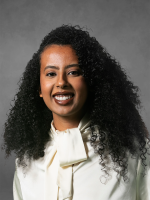
"If I knew anything else, I'd be like, 'OK, maybe we can.' But I've known America all my life. I was in kindergarten singing the Pledge of Allegiance every morning. All I know is here."
For many, the term "Dreamer" symbolizes hope and perseverance. But behind that word lie stories of sadness, struggle, and often sacrifice. Meet Luz Maria Tubb, formerly Luz Maria Castaneda, a DACA recipient. Her journey to the U.S. began 32 years ago.
"My parents moved from Mexico with my sister and me — or with me first, because I was 6 months old. At some point, immigration got really bad. One of my last memories from that area was lying down in an RV, in the dark, hiding. They were having a Christmas party or something, and the neighbors had called the police. Immigration showed up. My mom says we packed our van with just the stuff we had and drove all the way to Oregon. That was our initial move to the town I grew up in."
The emotional weight of that moment didn’t sink in at first. It wasn’t until Tubb turned 15 that she realized her dream had turned into a sobering reality.
"I asked my mother, 'Hey, Mom, when can I get my permit?' And that’s when she kind of let me know, 'You weren’t born here. You don’t have the same luxury as your friends. You don’t get to go out and learn how to drive.' I wouldn’t say my world shattered, but it definitely made me look at things differently."
A few years later, news spread that the Obama administration had established the Deferred Action for Childhood Arrivals (DACA) program. At 23 years old, Tubb received her first DACA card. For the first time, she could work legally. It was a milestone, but not without its challenges.
"I have it right here — the very first one that was given to me. But I lost hope in this card. There was a time when I lost my ID, and the only form of identification I had was this DACA card. I showed it to the TSA, and the officer looked at me, smirked, and said, 'This isn’t a valid ID.' They wouldn’t let me through TSA. I had to talk to a bunch of different people, and they finally let me through after patting me down. This card signifies a lot, but at the same time, people aren’t validating it."
Now a mother of two U.S.-born children, Tubb says the stakes feel higher than ever. DACA recipients are required to reapply every two years. If they want citizenship, they’re encouraged to return to their home country and lawfully re-enter the U.S.
"And that’s what’s so frustrating. The lawyers I’ve spoken to have given me the option: You can pay $17,000 to start the process and go to Mexico, plead for forgiveness. What I was told is that their goal is to keep me there. And that’s so terrifying when you have two small kids who depend on you."
Despite the challenges, Tubb remains a fierce advocate for her peers.
"Don’t give up. That’s why we’re Dreamers. We have a right to be here. I say that with all the respect in the world. I’m not saying it because I feel like we’re entitled to it, but I do feel that we weren’t given an opportunity to choose whether we wanted to come here or not. We were brought here young. But to tell us, 'OK, now go back' — go back to what?"
WGCU is your trusted source for news and information in southwest Florida. We are a nonprofit public service, and your support is more critical than ever. Keep public media strong and donate now. Thank you.